

News from Engineering and Science | Volume 4, Issue 2, November 2025
A word from the editor
In the November edition of the CTK Newsletter, we invite you to explore fresh scientific developments, technological innovations and current events in the world of science and technology. From discoveries that promise to better protect bees, to new approaches to energy independence and sustainable development, this issue provides a glimpse into a future co-created by researchers, engineers and students. We also focus on open science, opening the door to the wider public through transparency and collaboration. Let this Bulletin inspire new ideas, connections and a deeper understanding of the world around us.

Content:
News from around the world
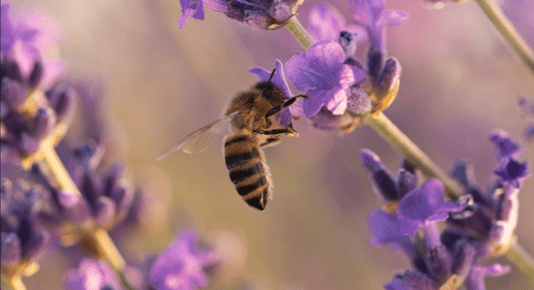
Pollen holds a secret that could save bees
New studies have shown that pollen collected by bees contains bacteria that produce antimicrobial substances and protect the hive from disease.
Scientists have discovered that pollen is a hidden source of natural medicine for bees. Symbiotic bacteria called Streptomyces produce antimicrobial compounds that fight deadly bee and plant pathogens. Bees collect these bacteria together with pollen and store them in their hives, creating a natural defence system. This could lead to new, sustainable ways of protecting pollinators and crops.
Source: Frontiers in Microbiology, 30 September 2025
Read more by Claire Reichardt, David Estes, Caitlin M. Carlson, Cameron R. Currie, Daniel S. May. Endophytic Streptomyces from honeybee hives inhibit plant and honeybee pathogens. Frontiers in Microbiology, 2025; 16 DOI: 10.3389/fmicb.2025.1644842
Prepared by: dr. Tjaša Urbič, univ. dipl. chem..,
inf. spec. in chemistry and natural sciences
Scientists discover the strongest signs of life on Mars yet
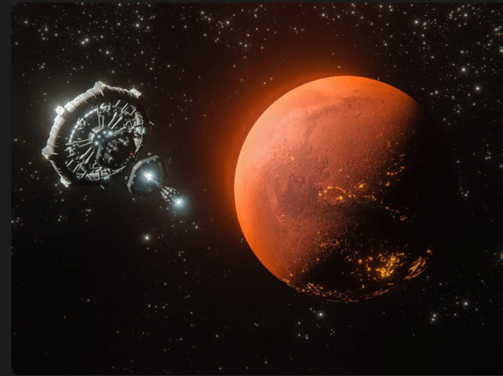
Samples sent back to Earth may contain evidence that microbial life once existed on Mars.
Data from the Perseverance rover showed that the crater, called Jezero, was once a calm lake that left behind muddy rocks rich in organically bound minerals. The presence of nodules of iron phosphate and iron sulphide suggests processes reminiscent of microbial activity on Earth. Scientists warn that only Earth-based laboratories can confirm their true origin, but the samples collected may contain the strongest evidence yet of ancient life on Mars.
Source:Frontiers, 1 October 2025
Find out more: imperial.ac.uk
Prepared by: dr. Tjaša Urbič, univ. dipl. chem..,
inf. spec. in chemistry and natural sciences
Scientists have just solved the "coolest" mystery of Uranus
For millennia, astronomers thought Uranus was just a distant star. It was not until the end of the 18th century that Uranus was widely accepted as a planet. To this day, this blue-ringed world has defied scientists' expectations, but new NASA research is helping to unravel some of its mysteries.
Uranus puzzled scientists for decades because it seemed to have no internal heat. Now, new computer modelling shows that the planet is actually giving off more energy than it receives from the Sun. This subtle heat suggests that Uranus' story is more complicated than previously thought, and offers new clues about its turbulent past and about exoplanets of similar size.
Source: NASA Science, 1 October 2025
Find out more: agupubs.onlinelibrary.wiley.com
Prepared by: dr. Tjaša Urbič, univ. dipl. chem..,
inf. spec. in chemistry and natural sciences

A cheaper alternative to electrolysers has been developed
Belgian start-up Solhyd has developed hydrogen modules to the stage where they can be commercially deployed.
The company has developed hydrogen generation modules that are installed under photovoltaic panels. This has led to a system that does not require an additional power source to produce hydrogen. The hydrogen modules also do not need a water source because they suck water vapour directly from the air. The hydrogen produced can be captured at the other end of the module, where it can be piped directly into the hydrogen pipeline, or it can be compressed or liquefied and put into suitable storage tanks.
They have also filed a patent application for the invention with WIPO, number WO2023222813A3.
Prepared by Mojca Kosem Avsec, mag. Ing. str,
inf. spec. for mechanical engineering and manufacturing

Experimental The world's first permanent repository for high-level radioactive waste is commissioned.
Finland is preparing for the actual start-up of the world's first permanent underground repository for high-level radioactive waste.
Work has been ongoing since 2004 at a depth of around 400 metres in what was once an exploration area. The spent nuclear fuel - 6 500 tonnes of uranium - will first be packaged in copper and cast-iron casks, which will then be filled with argon and sealed tightly. The canisters will be lowered 430 metres into the crystalline bedrock using a specialised crane, where they will be transferred to 8 metre deep disposal tunnels surrounded by bentonite clay for permanent disposal.
Source: POWER MAGAZINE
Prepared by Mojca Kosem Avsec, mag. Ing. str,
inf. spec. for mechanical engineering and manufacturing

Chinese car factories in Europe
The domestic car industry in Europe has been in a very bad situation recently, with lay-offs and plant closures since the beginning of the year (Nissan plant in Barcelona, Audi in Brussels, Volkswagen Group is shutting down several of its plants from time to time, as is Stellantis, Ford will be laying off in Germany).
Much of the problem is linked to poor sales of European cars in China, but now the trend is spreading to the old continent. Here, too, the production of cars by Chinese companies destined for European buyers is on the rise. In three years' time, Chinese car brands will account for six per cent of all cars produced in Europe, research shows. This figure is expected to be reached by 2028, three years from now, when all the announced factories (BYD, Chery, Leapmotor) will be fully operational.
Source: Finance
Prepared by: : Mojca Kosem Avsec, mag. Ing. str,
inf. spec. for mechanical engineering and manufacturing

ChatGPT Atlas - an innovative browser for more efficient information search
OpenAI launched in October 2025 ChatGPT Atlas, A new web browser that combines traditional browsing with an intelligent chat assistant. Atlas aims to simplify the search for information and allow users to interact with AI directly within web content. It is available for macOS at launch, with versions for Windows, iOS and Android to follow.
The browser is based on the ChatGPT language model and introduces a new approach - the user can in the so-called "sidecar" interface chat about the content you have open on your screen. The system understands the context of the page, extracts the essential information and offers additional explanations or links, without the need to copy the text into a separate window.
For more demanding users "agent mode"which automates basic online tasks such as searching for information, checking sources, filling in forms and collecting results. This functionality will be offered by OpenAI initially to ChatGPT Plus, Pro and Business subscribers.
Atlas opens up new areas of application for AI in research and engineering - from fast access to technical documentation and scientific papers to automated searches for data on materials, standards or patents. At the same time, questions are being raised about reliability, traceability of sources and privacy protection for such tools.
ChatGPT Atlas thus foresees a future where web browsing becomes active cooperation between humans and artificial intelligence, not just keyword search.
Source:
- https://openai.com/index/introducing-chatgpt-atlas/
- https://techcrunch.com/2025/10/21/openai-launches-an-ai-powered-browser-chatgpt-atlas/
Prepared by Sonja Zagorc Kontić, univ. dipl. Electrical Eng,
inf. spec. in electrical and computer engineering

News from Slovenia
Stronger together: researchers discover how cells regulate the collective balance of proteins
Scientists have discovered a new biological process called interstasis. This process allows cells to maintain a balance of proteins that are functionally similar to each other by fusing these proteins with their own messenger molecules called mRNAs.
The amount of each protein in the cells must be precisely regulated to keep them within the range needed for healthy function. This is particularly important for proteins that aggregate in liquid droplets called condensates. These proteins have flexible parts that do not have a fixed three-dimensional shape, so they can make many interconnections at the same time. If too many of these proteins accumulate, they can form harmful clumps. Proteins with similar flexible parts often clump together, making their balance a common challenge for the cell.
Source: Institute of Chemistry, 24 September 2025
Find out more: nature.com
Prepared by: dr. Tjaša Urbič, univ. dipl. chem..,
inf. spec. in chemistry and natural sciences

Efficient conversion of CO2 to ethanol
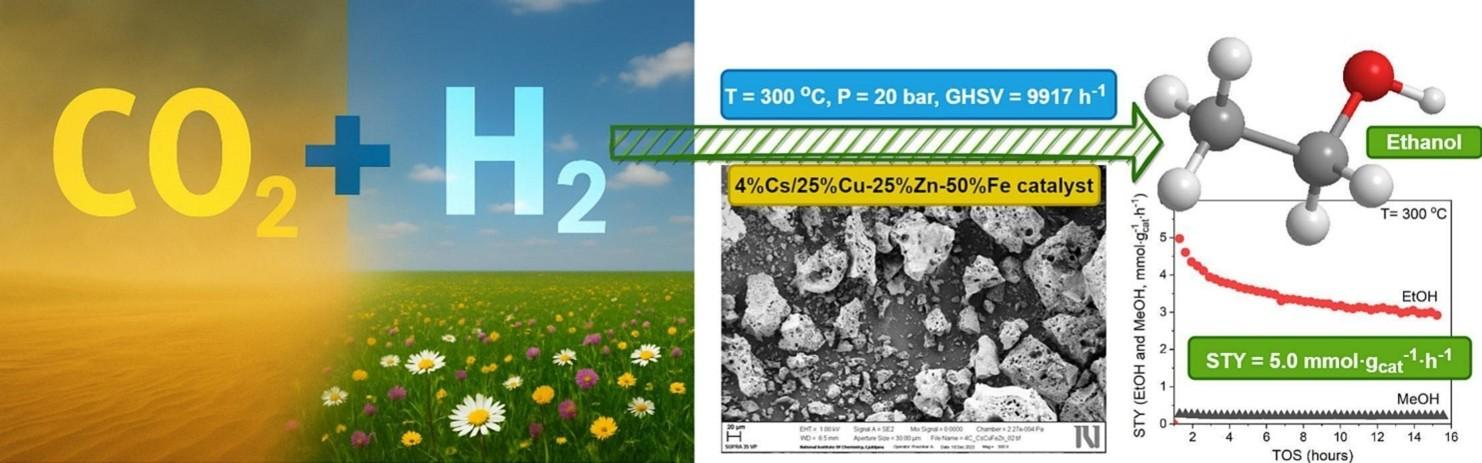
High yield ethanol production by thermocatalytic CO2 hydrogenation over Cs/CuZnFe catalyst in a continuous flow reactor.
Achieving high yields in the synthesis of ethanol from CO₂ remains one of the biggest challenges in sustainable catalysis due to thermodynamic and kinetic constraints. In this study, conducted by Dr. Andrii Kostyniuk and Dr. Blaž Likozar at the Department of Catalysis and Reaction Engineering, Institute of Chemistry, we present a breakthrough approach for the direct hydrogenation of CO₂ to ethanol using a Cs-promoted CuZnFe catalyst in a flow reactor. The work addresses key limitations of selectivity and stability and opens new avenues for valorisation of CO₂ into renewable liquid fuels.
Source: Institute of Chemistry, 31 July 2025
Find out more: sciencedirect.com
Prepared by: dr. Tjaša Urbič, univ. dipl. chem..,
inf. spec. in chemistry and natural sciences
Platforms for the realisation and characterisation of Tomonaga-Luttinger fluids
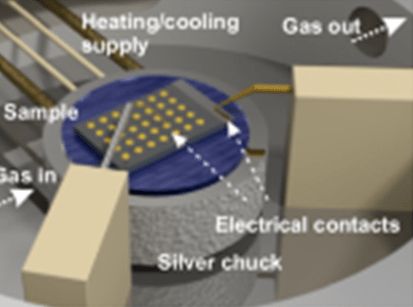
Magazine Nature Reviews Physics has published a review article entitled "Platforms for the realisation and characterisation of Tomonaga-Luttinger liquids". In the article, Associate Professor Martin Klanjšek, PhD, from the Department of Solid State Physics at the Jožef Stefan Institute, together with an international group of collaborators, gives an overview of the physics field that has developed over the last two decades on the basis of the theoretical concept of Tomonaga-Luttinger liquids. The concept describes the physics of interacting quantum particles in one dimension, where, compared to the more usual case of three dimensions, the role of interactions is so strong that it leads to a very unusual collective behaviour, which is, however, quite universal, so that it applies equally to fermions, bosons and anyons. The paper shows how this concept has proved successful in describing experimental results in systems as diverse as organic conductors, carbon nanotubes, quantum wires, topological edge states in quantum spin Hall insulators, Josephson junctions, Bose fluids in nanocapillaries, and quantum spin chains and ladders.
Source: Jožef Stefan Institute, 8 September 2025
Find out more: nature.com
Prepared by: dr. Tjaša Urbič, univ. dipl. chem..,
inf. spec. in chemistry and natural sciences

Kinetic selectivity in metal-organic fibre scaffolded chemical sensors
Accurate detection of low concentrations of VOCs represents a significant advance in future medical, safety and environmental applications. In a recent paper published in Nature Communications, Assoc Prof Dr Aleksander Matavž from the Department of Solid State Physics at the Jožef Stefan Institute and colleagues from KU Leuven, Belgium, have solved the challenge by introducing kinetic selectivity into a gas sensor, which is achievable in nanoporous crystals. The sensors developed detect diffusion properties of adsorbed gases, which can vary by several orders of magnitude even for very similar compounds. As a result, a single kinetic sensor can accurately resolve and quantify gases at extremely low concentrations, even in high humidity mixtures, and thus exceed the performance of the most advanced commercial electron nose. A patent application has been filed for the specific sensor structure. In addition to its application and commercial potential, the developed method represents a powerful tool for the study of diffusion in thin films over a wide concentration and temperature range.
Source: Institut Jožef Stefan, 24 September 2025
Find out more: nature.com
Prepared by: dr. Tjaša Urbič, univ. dipl. chem..,
inf. spec. in chemistry and natural sciences
Deep fakes: a technological challenge and a research response
Deepfakes are digitally created images, videos or sounds that can mislead viewers and listeners by mimicking real people. Modern generative models allow the creation of content that is almost identical to the real thing, opening the door to abuse in the media, politics and private life.
The Faculty of Electrical Engineering at the University of Ljubljana is developing advanced methods for detecting deep counterfeits. The DeepFake DAD project uses detectors that identify unusual or suspicious elements, even if it is a new type of deep fake. Their aim is to create tools that can even cope with future generative models that are not yet known today. One of the methods developed by the researchers is W-TDL (Window-Based Temporal Deepfake Localization), which allows to pinpoint where in the video the manipulation occurs, which is useful for subtle changes to facial or audio features.
In addition to deep forgeries, morphing attacks, where two faces are combined into one image that can correspond to multiple people on an identity document, are also dangerous.
Slovenian researchers have developed the SelfMAD method, which identifies subtle inconsistencies and anomalies in fused faces, even if these changes are barely noticeable to the human eye. Researchers at the Faculty of Electrical Engineering are working to develop detectors that can cope with all forms of face manipulation - from video and audio to ID documents - and stay one step ahead of rapidly advancing generative methods.
Source:
- Faculty of Electrical Engineering, University of Ljubljana - https://fe.uni-lj.si/v-laboratoriju-za-strojno-inteligenco-v-boj-proti-globokim-ponaredkom/
- Tapia, J. E. (2025). Single-morphing attack detection using few-shot learning. ScienceDirect. https://www.sciencedirect.com/science/article/pii/S0925231225007052
Prepared by Sonja Zagorc Kontić, univ. dipl. Electrical Eng,
inf. spec. in electrical and computer engineering
Slovenia before the energy transition: challenges and strategic choices
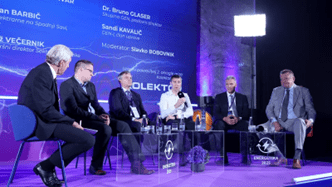
Slovenia is facing key decisions that will shape its energy future. At the Energy 2025 conference, experts pointed out that a stable and reliable electricity system does not happen on its own - it requires coordination of technologies, space, regulation and finance. The siting of transmission lines, hydroelectric and wind farms was at the forefront of the debate, and remains a challenge, while short-term solutions such as solar power and energy storage provide the necessary stability to the system.
The CEO of Elesa pointed out that siting infrastructure projects is complex and time-consuming, but at the same time crucial for ensuring security of supply. Experts from GenEnergy and Spodnji Sava Hydroelectric Power Plant added that political support and a clear framework are crucial, as only well-informed decisions allow for the implementation of major projects such as JEK2 and the increase of local energy production.
Economic and geopolitical factors are further influencing the energy market, making it essential to invest in innovative solutions and use indigenous resources. Multi-billion euro investments will be needed to cope with the volatility of renewables, underlining the importance of strategic planning and alignment with European regulations.
The conference showed that the Slovenian energy sector is not just a technical task, but a common challenge for all stakeholders. Success will depend on informed decisions, innovative solutions and cooperation - only then will the future of energy supply be reliable, efficient and resilient.
Source:
- https://www.delo.si/delov-poslovni-center/energetika/resitve-za-prihodnji-elektroenergetski-sistem
- https://www.delo.si/delov-poslovni-center/energetika/konec-septembra-smo-bili-pri-elektriki-70-odstotno-uvozno-odvisni
- https://www.delo.si/delov-poslovni-center/energetika/od-vizije-do-strategije-optimalnega-elektroenergetskega-sistema
Prepared by Sonja Zagorc Kontić, univ. dipl. Electrical Eng,
inf. spec. in electrical and computer engineering
News from CTK
Access Engineering - a new CTK for students,
researchers and engineers
CTK has enhanced its collection of expert resources with access to Access Engineering, McGraw-Hill's digital collection that combines peer-reviewed engineering content with practical tools for learning and research. The collection is aimed at students, researchers and professionals, and registered users can access the content free of charge.
The collection includes core textbooks and professional handbooks such as Perry's Chemical Engineers' Handbook, Marks' Standard Handbook for Mechanical Engineers and the Standard Handbook for Electrical Engineers. In addition, the platform offers interactive graphics, video explanations by university lecturers, Excel spreadsheets, calculators and downloadable spreadsheets for calculations, allowing direct integration of theory and practice. Users can tag materials, add notes and create personalised collections, increasing their usefulness for study and research.
The platform covers a wide range of fields: computer science, computer engineering, electrical engineering, energy, mechanical engineering, civil engineering, materials and industrial engineering, environmental sciences and chemical and industrial engineering. The fields of computer science and electrical engineering are well covered with basic content, algorithms, code examples, theoretical explanations and interactive demonstrations, while energy engineering includes both basic concepts and more advanced content related to sustainable resources and interdisciplinary approaches.
A key strength of Access Engineering is the combination of theoretical and practical content that allows for in-depth understanding and self-learning. The platform offers not only texts but also concrete tools for data analysis, problem solving and visualisation. The search engine allows advanced searches across multiple levels of taxonomies - including subjects, domains, equations and standards - and includes a self-completion function and suggestions for related topics, improving accessibility and search efficiency.
In addition to quality content and useful functionality, the credibility of the material is also an advantage, as the publications are professionally edited and regularly updated by renowned authors.
Access Engineering is a complete solution to support learning, research and the practical application of knowledge. Its value lies primarily in the fact that it links theory with applied tools and promotes an active and in-depth understanding of engineering content, which sets it apart from traditional collections of e-books and articles.
Source: accessengineeringlibrary.com
Prepared by Sonja Zagorc Kontić, univ. dipl. Electrical Eng,
inf. spec. in electrical and computer engineering

News from UL
Mechanical engineering professor becomes first European to win ASME Mayo D. Hersey Award in 20 years
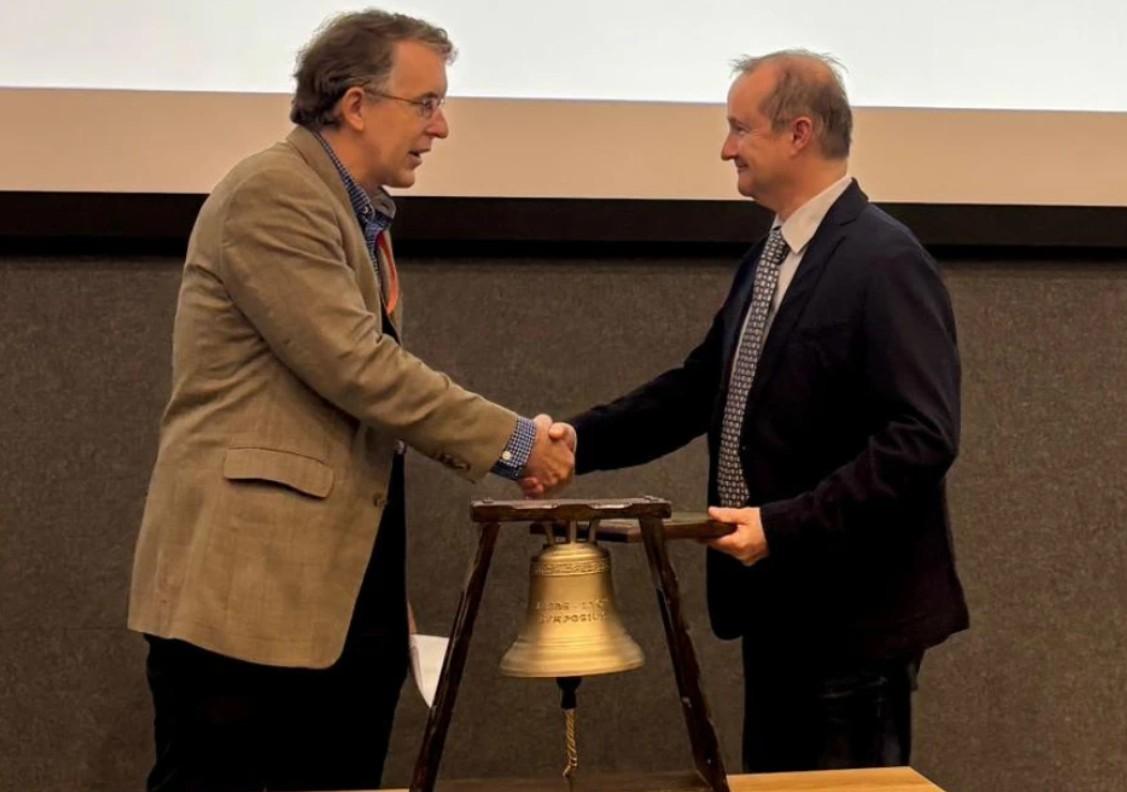
Prof. Dr. Mitjan Kalin from the Faculty of Mechanical Engineering, University of Ljubljana, is the first European to receive the ASME Mayo D. Hersey Award in two decades.
It is the highest academic award in the field of tribology. The Mayo D. Hersey Prize is awarded to an individual in recognition of outstanding and sustained contributions to the advancement of the science and engineering of tribology. Among others, Prof. Kalin has been the Editor-in-Chief of SCI's Lubrication Science, published by Wiley, for more than a decade and is the founder of the international Polytrib conference series.
Source: University of Ljubljana News
Prepared by Mojca Kosem Avsec, mag. Ing. str,
inf. spec. for mechanical engineering and manufacturing
ERC call for young researchers
Dominik Kozjek, PhD, was successful in one of the most prestigious ERC Starting Grant calls to launch his independent career.
The €1.5 million will enable five years of ground-breaking research and the creation of a world-class research team at the Faculty of Mechanical Engineering at the University of Ljubljana. Within the MeltingWell project, researchers will develop artificial intelligence methods to predict and eliminate variations in melting process conditions, which is one of the key limitations of 3D printing metals using the Selective Laser Melting (SLM) process.
Source: News of the Faculty of Mechanical Engineering UL
Prepared by Mojca Kosem Avsec, mag. Ing. str,
inf. spec. for mechanical engineering and manufacturing

Materials for capturing water from the air
Drinking water scarcity is one of the greatest global challenges facing the modern world.
While surface freshwater supplies are shrinking rapidly, the atmosphere contains six times more water vapour than the water in all the world's river systems combined. This remarkable, yet still under-exploited, natural resource opens the way to new, sustainable solutions for drinking water supply. It is in this field that an important scientific milestone has been achieved by Dr Primož Poredoš, Associate Professor at the University of Ljubljana, Faculty of Mechanical Engineering. His research on composite hygroscopic materials, which he carried out together with researchers from Shanghai Jiao Tong University and the National University of Singapore, was published in the prestigious journal Nature Reviews Materials. It is one of the most respected scientific journals in the field of materials.
Source: UL
Prepared by Mojca Kosem Avsec, mag. Ing. str,
inf. spec. for mechanical engineering and manufacturing


Open Science News
Citizen Science Day 2025

Citizen Science Day 2025 will take place in Nova Gorica this year. On Wednesday, 12 November, we will meet in The Franck Bevko Library in Nova Gorica.
The event will showcase inspiring national and international citizen science projects that serve as examples of successful citizen engagement in research processes. Participants will learn about Handbook Citizen Science in 5 steps, which provides practical guidance on how to plan and implement such projects. We will also present our work and plans Citizen Science Networks. In the afternoon, there will also be stands in the library where participants can find out more about the projects and how they can get involved themselves.
This year the event is taking place under the motto "Discover, collaborate, explore: from practice to people", which is why we have prepared for the end of the event three interactive workshopsfor participants of all generations - from the youngest to the oldest.
You are cordially invited to join us and discover the rich potential of citizen science and co-create the future of research in Slovenia.The event is free to attend, but prior log in.
The citizen science network now includes 68 Partners! Finally, the Institute of Chemistry joined us.
V Catalogue of projectswhich already includes 80 projects, we have added 4 more. The latest project added is From library to city 2.0: the changing spaces of the city.
- As part of the Technopark Celje Sustainability Festival, which runs from 18.9 - 8.10.2025, together with the team from Technopark Celje we filmed Citizen Science Network podcast in Slovenia. You are invited to take a look.
- The Citizen Science Network was also presented at the First joint Slovenian-Indian festival of science, innovation, smart technologies and business, organised by the Slovenian Science Foundation, took place in Ljubljana on 25 and 26 September 2025.
Prepared by Mitja Vovk Iskrić
Photo source: citizenscience.si
Advanced Seminar on Science Monetization
In cooperation with Zarja Muršič and Saš Dolenec, experienced science communicators, we held an Advanced Seminar on Communicating Science in the Open Library, which aimed to deepen the skills of communicating science - from critical evaluation and synthesis of knowledge to clear presentation of scientific methodology and research results.
It focused on the use of artificial intelligence and the creation of podcasts for science communication, and consisted of a theoretical part with lectures and a practical workshop.
Prepared by Mitja Vovk Iskrić

Open Science exhibition in Ljubljana
Open science is science based on transparency, collaboration and sharing of scientific research results within the research community and with the general public. The aim of open science is to facilitate the exchange of information, increase the accessibility and impact of scientific knowledge, and thus enable faster and more efficient societal progress.
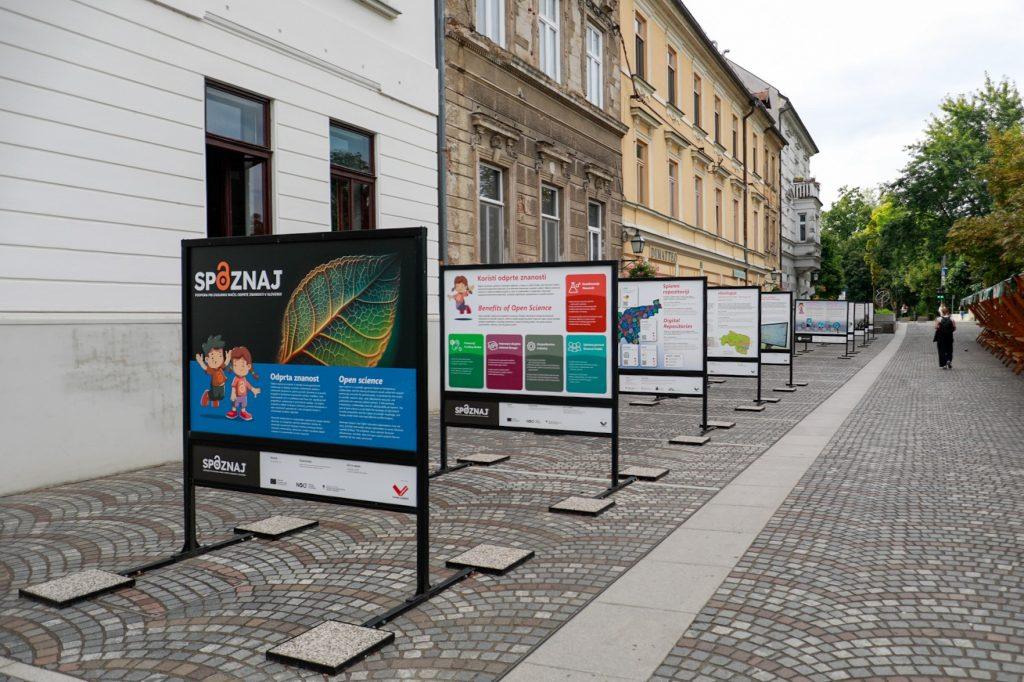
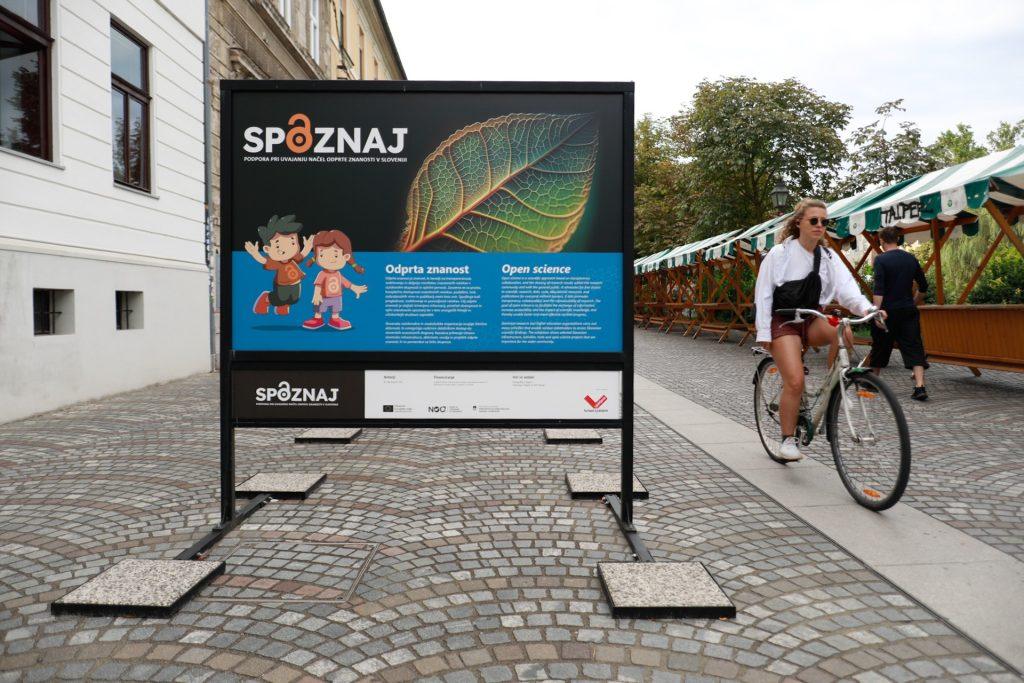
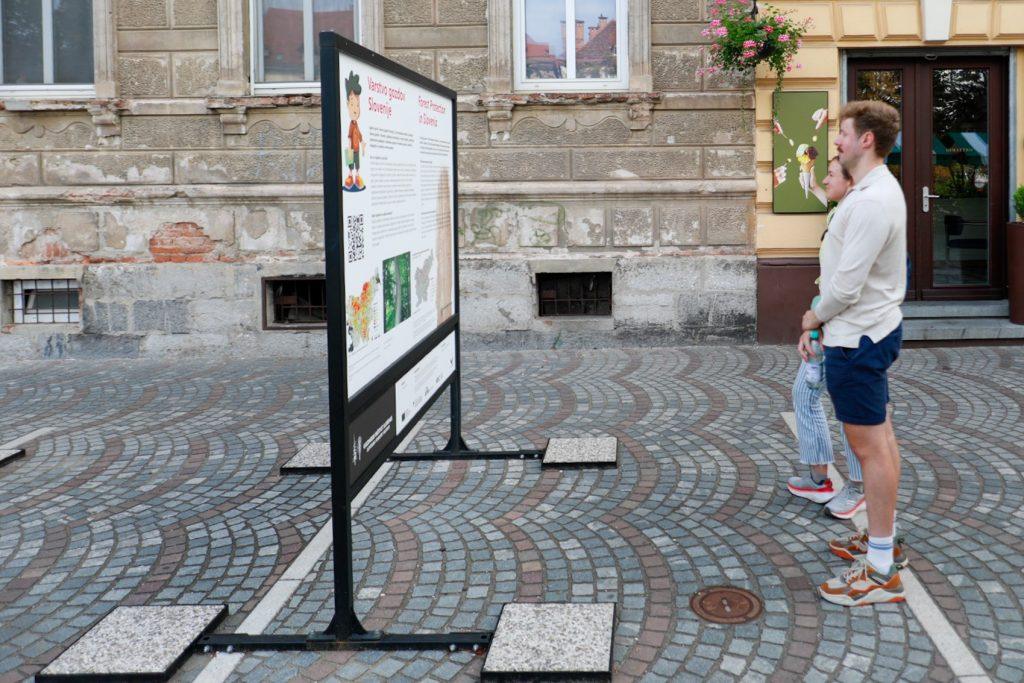
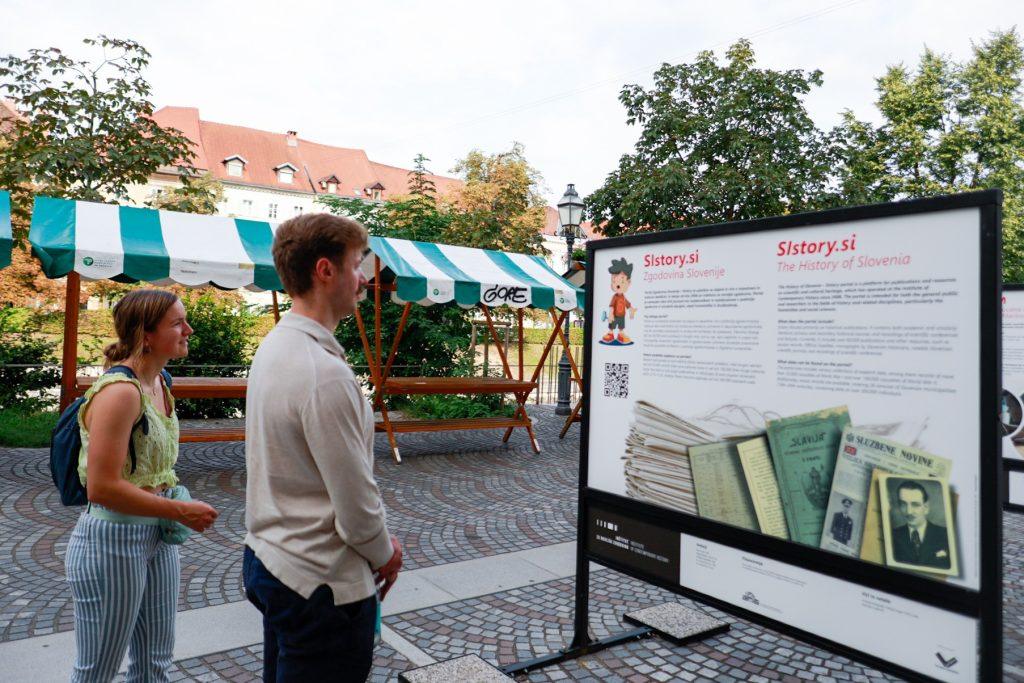
An exhibition that brings open science closer to the general public in an accessible and visually appealing way was on show at the Little Lodge in Koper and then on the Gallus Embankment in Ljubljana in the summer and autumn of 2025. It shows how open access to scientific content can stimulate innovation, build trust in science and enable more informed societal decisions.
The KNOW project has thus created an exhibition to show how the consortium partners are implementing the principles of open science: collaboration, transparency and knowledge sharing. The exhibition showcases selected Slovenian Open Science infrastructure, activities, tools and projects that enable better access to scientific content and the translation of knowledge into everyday life. It aims to show that science is not something distant or incomprehensible, but part of everyday life, influencing many fields.
The exhibition was on show at the Little Lodge in Koper from 29 July to 18 August 2025, and at the Gallus Embankment in Ljubljana from 28 August to 1 October 2025. The exhibition was produced in collaboration with the Municipality of Koper, Turizm Ljubljana and Art Design, d.o.o.
As the exhibition has attracted a great deal of interest at both locations, we intend to keep it open to the public after the physical exhibition has closed. The exhibition is now also available in the online gallery. Virtual posters from both exhibitions can be viewed here https://projekt-spoznaj.si/razstava-projekta/.
Find out more: The project "KNOW - Support for the introduction of open science principles in Slovenia" is co-funded by the Republic of Slovenia, the Ministry of Higher Education, Science and Innovation, and the European Union. NextGenerationEU through the national Recovery and resilience plans.
Prepared by Magdalena Gapsa, M.Phil., Research Data Info Specialist, and Dr Tea Romih, B.Sc., Research Data Info Specialist

Open Science exhibition in Koper
Project Meet organised the exhibition, which was installed in Koper (29 July to 18 August) and on the Gallus Embankment in Ljubljana (28 August to 30 September 2025), and is now available on the in virtual form.
The exhibition brings open science closer to the general public in an accessible and visually appealing way, taking visitors into a world of research where knowledge, data and results are accessible to all - without barriers. You will learn how Slovenian research organisations are implementing the principles of open science and walk through concrete examples, tools and projects that are improving access to scientific content and the translation of knowledge into everyday life.
Open science is science based on transparency, collaboration and sharing of scientific research results within the research community and with the general public. The aim of open science is to facilitate the exchange of information, increase the accessibility and impact of scientific knowledge, and thus enable faster and more efficient societal progress.
Slovenian research and higher education organisations carry out a number of Open Science activities, through which various stakeholders can access Slovenian scientific knowledge. The exhibition showcases selected Slovenian Open Science infrastructure, activities, tools and projects that are useful to the wider community. It aims to show that science is not something distant or incomprehensible, but part of everyday life, influencing many fields.
The exhibition is part of the project GET TO KNOW, which brings together research organisations across Slovenia with the central aim of bringing science closer to people. The project is co-funded by the Ministry of Higher Education, Science and Innovation and the European Union - NextGenerationEU through the National Recovery and Resilience Plan.
You are invited to take a look!
Prepared by Patricija Fašalek, BA Journalism and MA Cultural Studies
Author of photos:Gašper Lešnik
Econovice
Scientists create a biodegradable plastic that is stronger than polyethylene terephthalate (PET)
A Japanese research team has successfully used E. coli bacteria to produce PDCA, a powerful biodegradable alternative to plastics. Their method produces no toxic by-products and achieves record production levels.
Plastic is an environmental problem, which is why this achievement is so important. Moreover, it is mostly derived from oil, which makes it non-renewable and dependent on geopolitics. Research groups around the world are working on both biodegradable and bio-based alternatives, but there are often problems with yield, purity and, consequently, production costs.
PDCA, an alternative to PET, is biodegradable and has superior physical properties. A team of bioengineers from Kobe University has used a genetically modified E. coli bacterium to produce this compound from glucose at previously unattainable levels and without by-products. This has opened up many possibilities for the future of bioengineering.
Source: Kobe University, 4 September 2025
Find out more: kobe-u.ac.jp
Prepared by: dr. Tjaša Urbič, univ. dipl. chem..,
inf. spec. in chemistry and natural sciences

Toxic waste could become a source of clean energy
Converting toxic biocarbon into high-grade biochar could revolutionise clean energy and sustainability.
When biomass, such as crop residues, wood or other organic matter, is heated to produce clean energy and biochar, a thick liquid known as biocarbon is also produced. This tar can easily clog pipelines, damage equipment and pose an environmental risk if released into the atmosphere. For decades, researchers have been looking for ways to eliminate or neutralise it. Today, it can be converted into biochar and used for clean energy, protecting the environment. This innovation could reduce emissions, generate profits and solve a major problem for the bioenergy industry.
Source:Biochar Editorial Office, Shenyang Agricultural University, 26 September 2025
Find out more: springer.com
Prepared by: dr. Tjaša Urbič, univ. dipl. chem..,
inf. spec. in chemistry and natural sciences

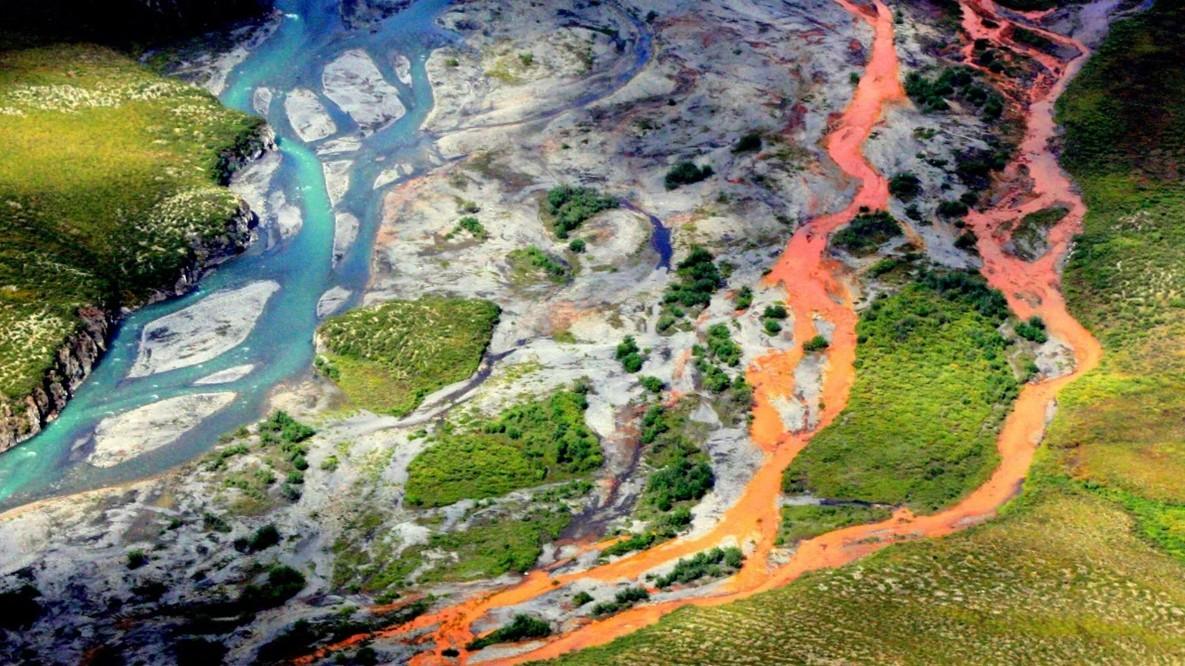
The intriguing reason why Arctic rivers are turning rusty orange
When water freezes, it can drive hidden chemical processes. This causes rivers to turn rusty orange.
Researchers at Umea University have found that ice can trigger more powerful chemical reactions than liquid water itself, by dissolving iron minerals in extreme cold. Freeze-thaw cycles only intensify the effect, releasing iron into rivers and soils. As climate change accelerates these cycles, Arctic waterways could face major changes.
Source:Umea University, 22 September 2025
Find out more: pnas.org
Prepared by: dr. Tjaša Urbič, univ. dipl. chem..,
inf. spec. in chemistry and natural sciences
Book novelties
UNDERSTANDING GENETICS AND HEREDITY: A Comprehensive For Students
Author: Robert Williams
Scope: biochemistry, genetics, inheritance
Content: Whether you are a student, an educator or simply curious about the science of heredity, this book takes you on a journey through the fundamental principles of genetics, from the structure of DNA to the latest gene editing technologies. What makes this book unique is its ability to simplify complex genetic concepts without compromising scientific accuracy. Written in an engaging and interactive style, it links theoretical knowledge with real-world applications, showing how genetics is shaping everything from human health to agriculture and environmental protection. This handbook is designed to be both educational and engaging, ensuring that readers not only learn but also appreciate the wonder of genetics.
Recommendation: for students, researchers and other science enthusiasts
Information Specialist: dr. Tjaša Urbič, univ. dipl. chem..,
inf. spec. in chemistry and natural sciences

Lonely Planet The Joy of Birdwatching
Author: Lonely Planet
Scope: ornithology, birds, observation
ContentDescription : This book reveals the magic of birds, acts as a travel guide and creates a desire to observe. Discover 60 exciting adventures and 120 additional ideas for excursions. Meet some of the world's most remarkable birds - big and small - and be amazed by the sights, sounds, feelings and environments you can experience at each of the locations featured in this unique guide. The book covers Africa and the Middle East, America and Antarctica, Asia, Europe and Oceania.
Recommendation: for birdwatchers, nature lovers and researchers
Information Specialist: dr. Tjaša Urbič, univ. dipl. chem..,
inf. spec. in chemistry and natural sciences

The Microsoft Office 365 Bible
Author: James Holler
Scope: computer science
Content: Book The Microsoft Office 365 Bible is a comprehensive guide that provides in-depth coverage of all the key Microsoft Office Suite programs, including Excel, Word, PowerPoint, Outlook, OneNote, OneDrive, Teams, Access and Publisher. It is aimed at both beginners and advanced users who want to make effective use of the features of these programs and increase their productivity at work, study or on personal projects.
The author presents in detail the basic functions of each program, practical tips, shortcuts and tricks to help you work faster and smarter. The book helps readers understand which program is best suited for a specific task, how to take advantage of unique features and how to simplify work without wasting time on unnecessary steps. In addition to basic knowledge, readers also gain insight into more advanced functionality that is rarely used by most users but can significantly improve efficiency.
The book also includes additional e-books that offer readers practical tips on organising their home workspace, managing time, increasing productivity and improving communication skills.
Recommendation: This job is ideal for anyone who wants to master Microsoft Office 365, become a more efficient user and gain confidence in working with computer tools.
Information Specialist: Sonja Zagorc Kontić, univ. dipl. Eng. in Electrical Engineering,
inf. spec. in electrical and computer engineering

Energy 4.0: Trends, Challenges, and Applications
Author: Gulshan Sharma, Pitshou N. Bokoro, Sudeep Tanwar
Scope: electrical engineering, power engineering
Content: Book Energy 4.0: Trends, Challenges, and Applications is an in-depth handbook exploring current trends, challenges and solutions in the energy sector in the context of the Fourth Industrial Revolution. It is aimed at senior university students, Masters students, researchers and engineers who want to understand the role of advanced technologies in developing user-friendly, economic and viable solutions to mitigate the current and future energy crises.
The authors focus on renewable and clean technologies and address key areas such as electricity transmission and distribution systems, demand response, net metering, smart grids and cyber security. In addition, the book explores electric vehicles, vehicle-to-grid technologies, charging while driving and autonomous mobile robots, offering insights into the future energy infrastructure.
The book also includes methods for modelling, prediction and optimisation of energy systems, energy storage techniques, energy efficient systems, energy conversion topologies and control algorithms for solar systems and efficient solar energy management. It provides readers with an understanding of the full range of technologies and approaches that are key to the modern and future energy industry.
Recommendation: This is the perfect choice for anyone who wants to deepen their knowledge of energy systems, renewables and innovative solutions in the spirit of Industry 4.0, and develop the skills to design sustainable and efficient energy solutions for the future.
Information Specialist: Sonja Zagorc Kontić, univ. dipl. Eng. in Electrical Engineering,
inf. spec. in electrical and computer engineering

Publisher: Central Technical Library of the University of Ljubljana, Trg republike 3, 1000 Ljubljana
Editor: Dr Tjaša Urbič (tjasa.urbic@ctk.uni-lj.si)
Technical EditorDarko Majcenovic (darko.majcenovic@ctk.uni-lj.si)
Text reviewed by: Jože Brišnik
ISSN: 2820-445X
E-bulletin CTK is the newsletter of the Central Technical Library of the University of Ljubljana.
If you would like to share interesting information about your work on the CTK E-bulletin with others, please send it to us. Please address your contributions to the e-bulletin editor (tjasa.urbic@ctk.uni-lj.si).
