

⬅️ #CTK Newsletter – November 2026
Fungi, of which mushrooms are a part, are extremely important organisms, without which the cycle of life on Earth would not be possible. That is why we celebrate various international mushroom days, including the unofficial European Mushroom Day on the last Saturday in September, which was introduced by a German magazine Der Tintling.
The science that studies fungi is called mycology. What we call mushrooms are merely the fruiting bodies, i.e. the external manifestations of a much larger system that also includes the mycelium, which is hidden from view and actually forms the body of the fungus. The great diversity of fungi also includes those which, in addition to their mycelium, have a fruiting body hidden underground; these are, for example, truffles or tubers. The mycelium spreads through the soil, wood or other organic material, breaking it down with enzymes and thus obtaining nutrients for further growth. It consists of a network of thread-like structures called hyphae. Trees also communicate via the mycelium – they exchange water, nitrogen, carbon and other nutrients through the hyphae. The largest known mycelium is located in Oregon in the USA and covers as much as 890 hectares; its age is estimated to be at least 2,500 years.
Fungal fruiting bodies, or mushrooms, come in various sizes and shapes; they usually consist of a stipe and a cap, which together form the flesh of the fruiting body. A vast number of fungi have developed distinctive features, such as the net-like »skirt« found on the mushroom Phallus indusiatus. On the underside of the cap, protected from the rain, spores – microscopic cells used for reproduction – form in the spore-bearing structure of the mushroom. Their size usually ranges between 1 and 8 µm. Many fungi eject their spores upwards into the air (these are ascomycetes or Ascomycetes, (in which the spore-bearing structures are usually facing upwards); otherwise, fungi disperse their spores by ejecting them downwards and attaching them to moisture on the surface of the fungus, where they are carried by gravity and the wind, and some species with the help of insects. Consequently, the area covered by millions of spores can be very extensive. They can also reproduce through the spread of mycelium. The spore-bearing structure may consist of lamellae or tubes. Among the tubular fungi, the chanterelle is very well known and highly prized; an example of a lamellar fungus is the stork’s bill. The tubes and gills may be free, attached to the stipe, straight or running down the stipe (extending down the stipe). The layer of tubes can be removed from the cap.
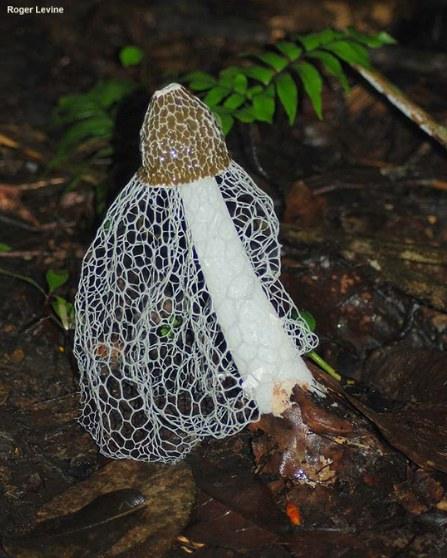
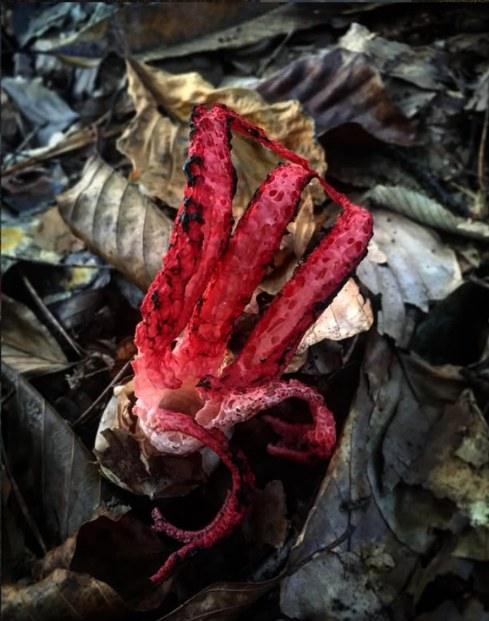
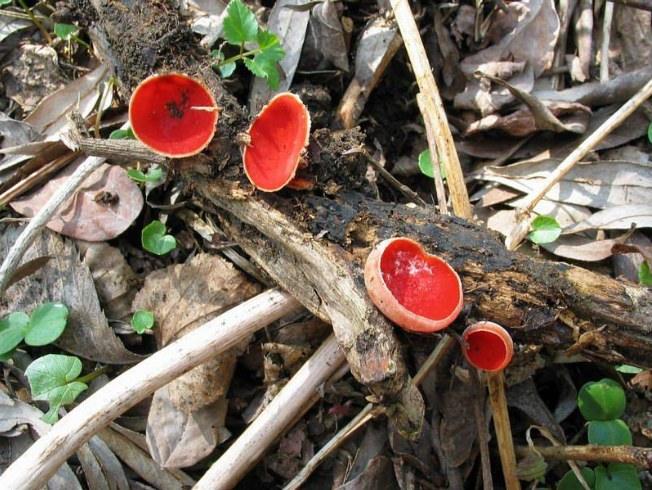
Cap shapes vary from mushroom to mushroom; they may be spherical, convex, cup-shaped, funnel-shaped, conical, ovoid or humped, and may have a curled edge. Caps are not necessarily smooth; they may, for example, be pitted. The colour of the cap is not always a reliable characteristic for identifying a species of mushroom, as it can change dramatically as the mushroom matures or under different weather conditions. The flesh of some mushrooms may absorb water and darken, whilst others become more translucent and pitted. Like the caps, the stems of mushrooms come in various shapes and sizes; they are usually cylindrical and often have a ring or veil, which is the remnant of the membrane that holds the cap in place before it opens when the mushroom is still small. Some have a bulbous, thickened lower part of the stem, whilst in others it is surrounded by a leathery sheath. In edible mushrooms that have a ring, this can slide up and down, whereas in poisonous ones it is fixed to the stipe. Sometimes the ring adheres to the edge of the cap; in older mushrooms, it may fall off. The surface of the stipe can also have a varied texture: finely hairy, scaly, with a snake-like or net-like pattern, longitudinally fibrous or pitted. The surface of the entire mushroom may be scaly, smooth, slimy or dry; in some species, the colour and texture change as the mushroom grows. Some mushrooms are hard, whilst others are completely soft; some are branched like coral and lack a proper cap, whilst others look like balls, and some resemble cups. Care and a good knowledge of mushrooms are always essential when foraging, as almost every mushroom has a poisonous lookalike.
Fungi are found all over the world: in forests, arid deserts, rivers, high up in the mountains and deep in the sea; some species even thrive in our homes and on and inside our bodies. They have adapted to various ways of life and feeding; unlike plants, they do not contain chlorophyll and do not produce their own food, but, like animals, they consume oxygen and produce carbon dioxide. Another characteristic that some fungi share with animals is the ability to produce melanin, a dark pigment which, amongst other things, provides protection against ultraviolet radiation.
The first group of fungi, based on their feeding habits, consists of symbiotic or mycorrhizal fungi, which live in symbiosis with certain plant species (primarily trees). Their mycelium and the plant’s roots exchange substances vital for life. Those that penetrate the plant’s roots are called endomycorrhizae, whilst those that associate only with the surface of the roots are known as ectomycorrhizae. Some thrive only with a single specific tree species, whilst others live in symbiosis with several species. Many mushrooms prized in cuisine belong to this group. For example, the growth of chanterelles in symbiosis with spruce trees benefits both. The second group consists of fungi that colonise dead organic matter, whether plant or animal in origin. Together with bacteria, they are extremely important, as dead organic matter could not decompose without them. Among them are dung fungi, which grow on fertilised meadows or on old cow dung. The third group consists of parasitic fungi, which draw the nutrients they need to survive from a living host, which they may damage or even cause to die. Thus, fungi that thrive on dead wood differ from those that thrive on living wood, and the latter are regarded as pests in forestry.
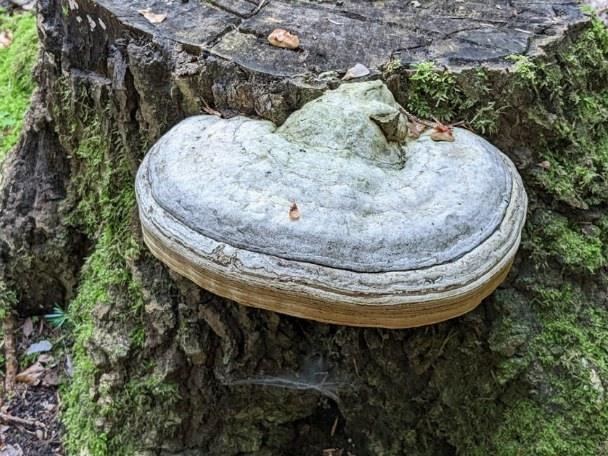
Examples of fungi that grow exclusively on certain species of trees include the birch polypore (Leccinum scabrum), which grows only beneath birch trees and Turkish oak (Leccinum quercinum), which grows only under oak trees, beech fire striker (Fomes fomentarius) can, for example, be found on dead or diseased beech and birch trees.
Some mushrooms grow in so-called fairy rings or circles, which are associated worldwide with legends of forest fairies, who are said to dwell there and test those who enter such a circle, and with witches who are said to gather there. The reason for this pattern of growth lies in the mycelium, which spreads out in all directions from a single point, causing the mushrooms to grow in a circle. These circles can be small or large; they can grow up to 600 metres in diameter.
The mushrooms we use in cooking contain protein, fibre, vitamins and carbohydrates, whilst being low in calories and fat. A whole range of mushrooms also contain other substances that make them beneficial to consume; the most common use is for medicinal purposes. Owing to their adaptogenic and immunomodulatory properties, they are consumed as extracts in the form of tinctures and powders. Among the better-known mushrooms of this type are the East Asian reishi mushroom (Ganoderma lucidum or the glossy oyster mushroom), which has a history of use in traditional Chinese medicine, and shiitake (Lentinula edodes or edible tooth fungus), which contains lentinan to boost the immune system. Then there are also bristly bearded tit (Hericium erinaceus), which grows on deciduous trees, and chaga (Inonotus obliquus), which originates from Eastern Europe and Siberia, and many others that contain bioactive molecules such as antioxidants, terpenes, beta-glucans, polyphenols and flavonoids. These substances help the body to combat stress and strengthen the immune system.
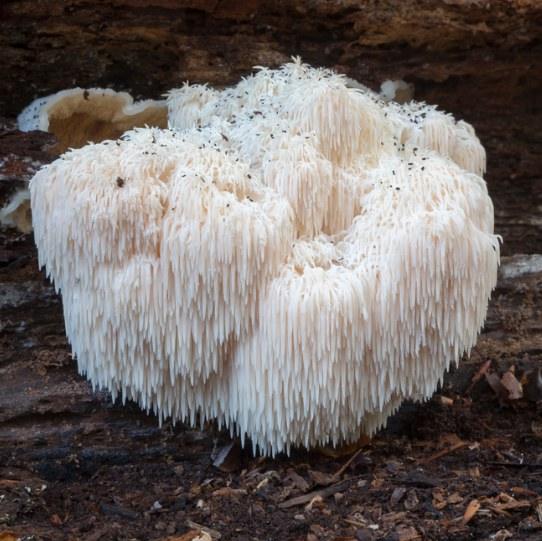
As well as mushrooms that have a beneficial effect on the body, there are a vast number that are poisonous. Some are conditionally edible, others are poisonous, and others still are deadly, so it is wise to exercise caution when foraging.
Probably the best-known poisonous mushroom is Amanita muscaria or fly agaric, which, with its charismatic red-and-white hat, was once one of the symbols of Christmas in the Western world. It contains a poison called muscarine. Its relative Amanita phalloides or green toadstool (known as the Death Cap) is one of the most poisonous mushrooms, as mushroom pickers often mistake it for another species due to its resemblance (when young, it resembles the parasol mushroom and the false parasol mushroom) and is thus responsible for the highest number of fatalities; worldwide, it is believed to be responsible for more than 90 per cent of all fatalities resulting from mushroom poisoning. In recent decades, humans have spread it all over the world – except for Antarctica – through the transport of timber, meaning that its lethality is only increasing. It contains amatoxins, toxic cyclopeptides that destroy the liver; their effects become apparent within three days of ingestion. The main one is amanitin, which is not destroyed by cooking or drying. Another highly poisonous mushroom found in our region is the field amanita (Cortinarius orellanus), which has a radish-like smell, is a deep yellow-orange colour and contains orelanine, which destroys the kidneys; symptoms may appear a few weeks after ingestion, and are fatal after a few months.
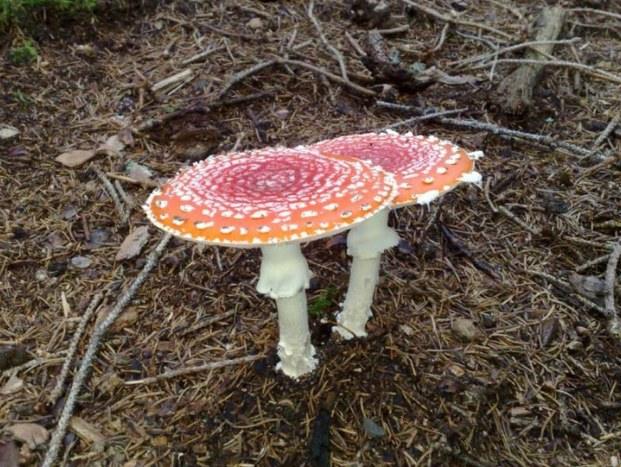
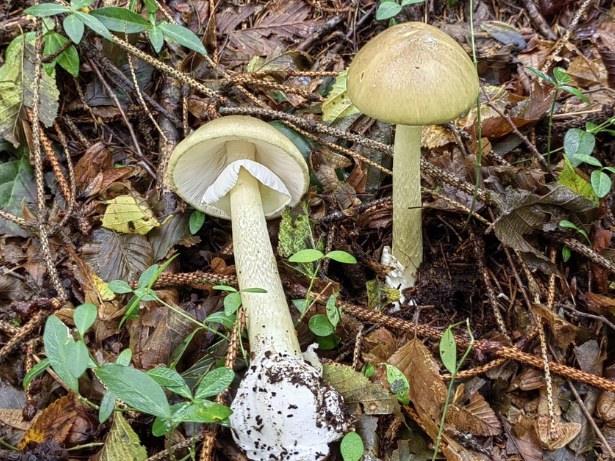
Some mushrooms contain active substances which are not lethal and do not cause any adverse physical symptoms; nevertheless, when ingested, they alter a person’s psychophysical state. The best known are the fly agaric or Psilocybe, so-called ‘crazy mushrooms’ or ‘magic mushrooms’, which contain the psychotropic compounds psilocin and psilocybin, the latter of which is converted into active psilocin within the body. Psilocin is a tryptamine alkaloid, structurally similar to serotonin; when ingested, it therefore activates the receptors responsible for regulating perception and mood. There are nearly 400 different species of psychoactive mushrooms known worldwide.
There are also several dozen species of fungi that glow in the dark. We call this ability bioluminescence, and is made possible by the so-called luciferin mechanism via the cap, the gills, or both. This is a process in which luciferin, an organic substrate compound, and the enzyme luciferase, upon oxidation, trigger a transition to an excited state, which is unstable and releases excess energy in the form of light, without releasing heat. The conditions for this type of reaction must be just right, ranging from the type of substrate to a suitable temperature and, of course, the presence of oxygen. The same process occurs in other organisms in nature, such as fireflies and deep-sea organisms, which use it to communicate for various purposes. A large number of fungi glow under UV light in the dark; this is known as fluorescence.
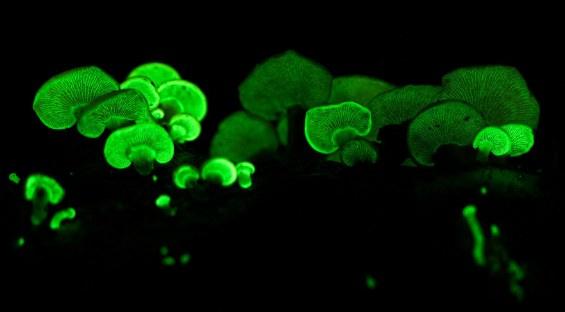
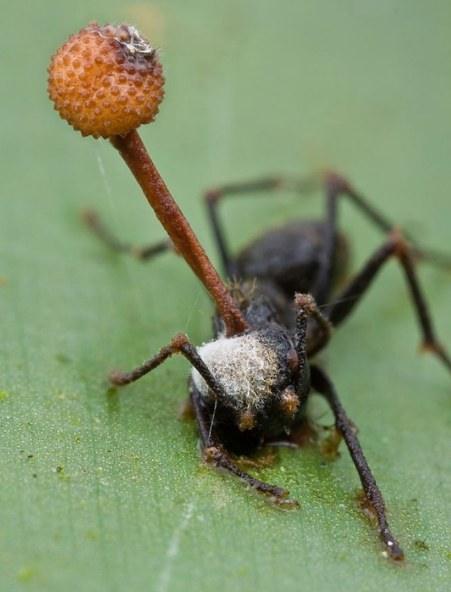
Also of interest are parasitic fungi, which colonise their hosts – usually insects, spiders and other invertebrates – and use them to reproduce more effectively. The best-known example is Ophiocordyceps unilateralis, which belongs to the Cordyceps genus, is found mainly in tropical rainforests. It most commonly infects ants, taking control of their nervous system and causing them to leave their colony, climb a tree and cling to the underside of a leaf, where they die. A fungus grows from the corpse, releasing spores over a wider area than it would on the ground, thereby ensuring the continuation of the species and increasing the likelihood of finding new victims for further reproduction. As it hijacks the host’s nervous system to alter its behaviour, it has been given the name ‘zombie ant fungus’.
Countless species of fungi have developed other distinctive features. One example is the stinking morel (Phallus impudicus), which gives off a strong smell of offal that can be detected from a distance of 20 metres. This attracts flies to the sticky tip of the spore-bearing structure, which then disperse the spores. These mushrooms are not edible, but the egg-shaped structures from which they grow, known as ‘devil’s eggs’, are edible.
As well as eating mushrooms, we have developed other uses for them. There is a building insulation material made from the mycelium of the beech oyster mushroom, which is lighter and cheaper than glass fibre and contains no hazardous chemicals. An alternative to leather is a material made from mushrooms and mycelium, which is just as durable and looks like leather; it is used to make bags, shoes and jackets. One of the mushrooms used to make it is the reishi.
- Bunyard, B. A. (2022). The Lives of Fungi: A Natural History of Our Planet’s Decomposers. Princeton University Press.
- Ekodezela. (9 October 2023). Can you recognise this poisonous mushroom, which has already been mistaken for an edible one several times here this year? Ekodezela. https://www.ekodezela.si/eko-aktualno/poznate-to-strupeno-gobo-ki-so-jo-letos-pri-nas-ze-nekajkrat-zamenjali-za-uzitne/
- Slovenian Mushroom Society (n.d.) About fungi. https://www.gobe-zveza.si/o-glivah/
- Mushrooms: simple and reliable identification (1st ed.). (2006). Nature.
- Gobnjak. (2026, 26 February). Resati Bradavec in the Dust. https://gobnjak.com/products/resasti-bradovec-v-prahu-1
- Gobnjak. (3 November 2023). The Death-Dealing Mushroom [Facebook post]. Facebook. https://www.facebook.com/gobnjak/posts/gobji-%C5%A1opek-smrti-%EF%B8%8Fza-vse-nabiralce-gob-je-klju%C4%8Dno-da-vemo-katere-so-najbolj-str/659413539654748/
- Šerod, S. (16 May 2020). Fungi and their place in nature. Lisička Maribor Mushroom Society. https://www.gobe.si/Mikologija/GliveInNjihovProstorVnaravi
- Šerod, S. (14 May 2020). Fungal reproduction. Lisička Maribor Mushroom Society. https://www.gobe.si/Mikologija/RazmnozevanjeGliv
- Valant, D. (2022), Bioluminescent fungi and their applications in biotechnology. Thesis. Ljubljana: D. Valant https://hdl.handle.net/20.500.12556/RUL-137745 [Accessed 28 August 2026].
