

At the fourth national event of the SPOZNAJ project, local and international experts discussed the reform of research evaluation, open science, and the changes being brought about in this field by European and national initiatives.
The project »LEARN - Support for the implementation of open science principles in Slovenia«concluded his three-year tenure with” 4. national events, which, as part of FestUM – the University of Maribor’s Festival of Science and the Arts brought together domestic and international experts from the fields of research, higher education and science policy. The central theme of this year’s meeting was the evaluation of research work in the context of open science and the search for approaches that, in addition to research excellence, also take into account quality, societal impact, collaboration and the openness of research.
The event was opened by Maja Peharc from the Directorate for Science and Innovation at the Ministry of Higher Education, Science and Innovation, who, at the conclusion of the project, emphasised its importance for the development of open science in Slovenia. »Over the past three years, the SPOZNAJ project has made a significant contribution to the understanding and implementation of open science principles within the Slovenian research community. It has empowered researchers, research organisations, librarians, data curators and other support services, though our work does not end with the conclusion of the project. Open science is not a one-off project, but a long-term shift in research culture, which we will continue to help shape in the future,« she emphasised.
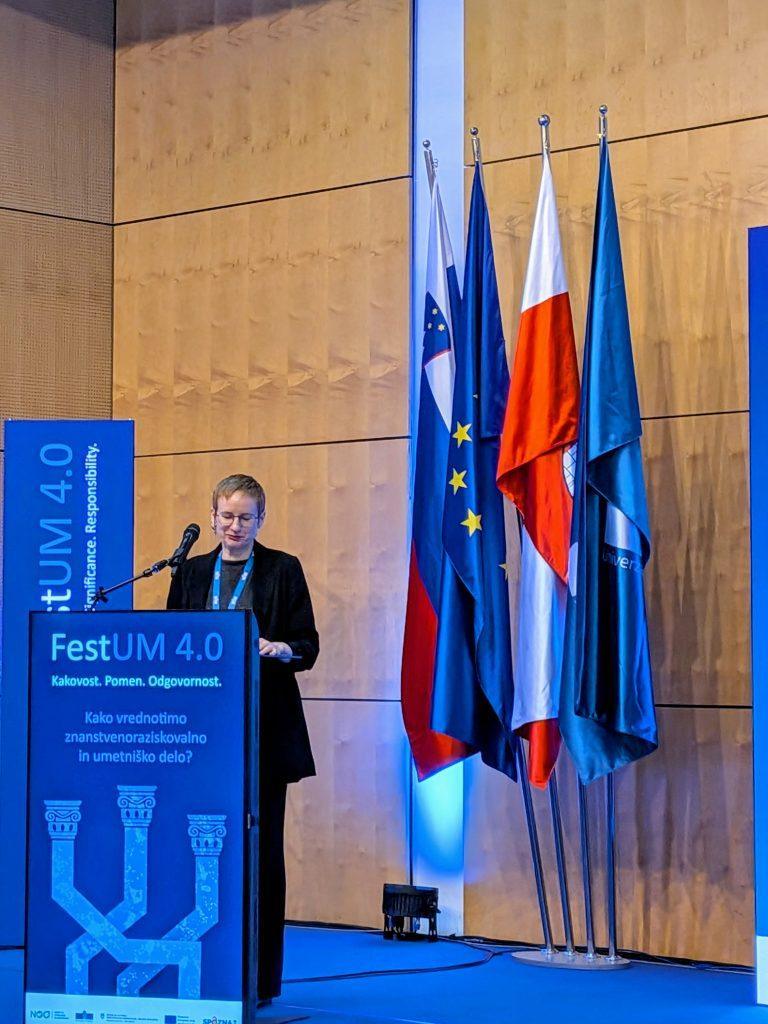
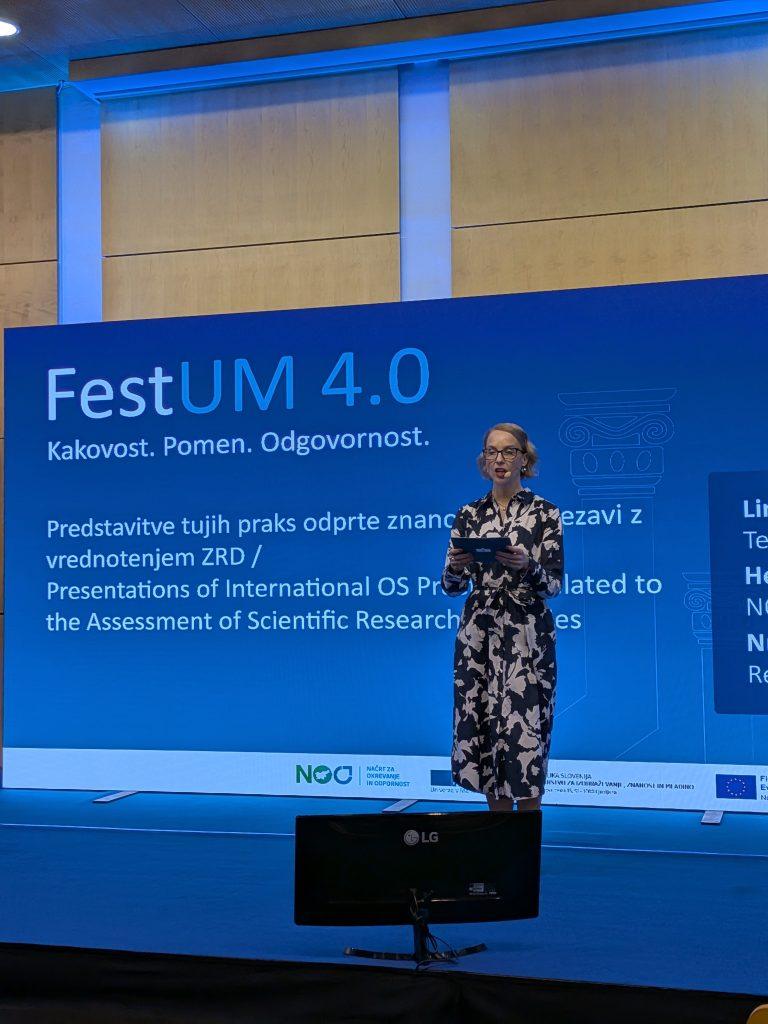
Experience in Europe shows a shift from indicators towards a holistic assessment
In the first part of the event, representatives from research institutions in Norway, Ireland and Catalonia presented approaches to reforming research evaluation that increasingly prioritise the quality of research work, open science and the broader societal impact of research. The European Research Area is gradually moving away from systems based primarily on the number of publications and citations, and is developing models that evaluate researchers and research organisations more holistically. Key elements of this reform include the recognition of open knowledge sharing, research data management, engagement with society, interdisciplinarity and other contributions that are often not captured by traditional bibliometric indicators.
Herman Strøm from the University of South-Eastern Norway presented the Norwegian NOR-CAM framework, which takes a broader view of research careers than simply scientific publications, Lindsay Dowling from the Technological University of Dublin She emphasised the importance of introducing changes gradually, developing support services and involving the research community in the reform process. Núria Benítez Monforte from the Catalan institution CERCA She presented a model for evaluating research organisations based on expert assessment of selected research achievements and the strategic development of institutions, rather than on pre-defined quantitative indicators. Participants agreed that the reform of research evaluation requires time, long-term institutional support and changes in research culture.
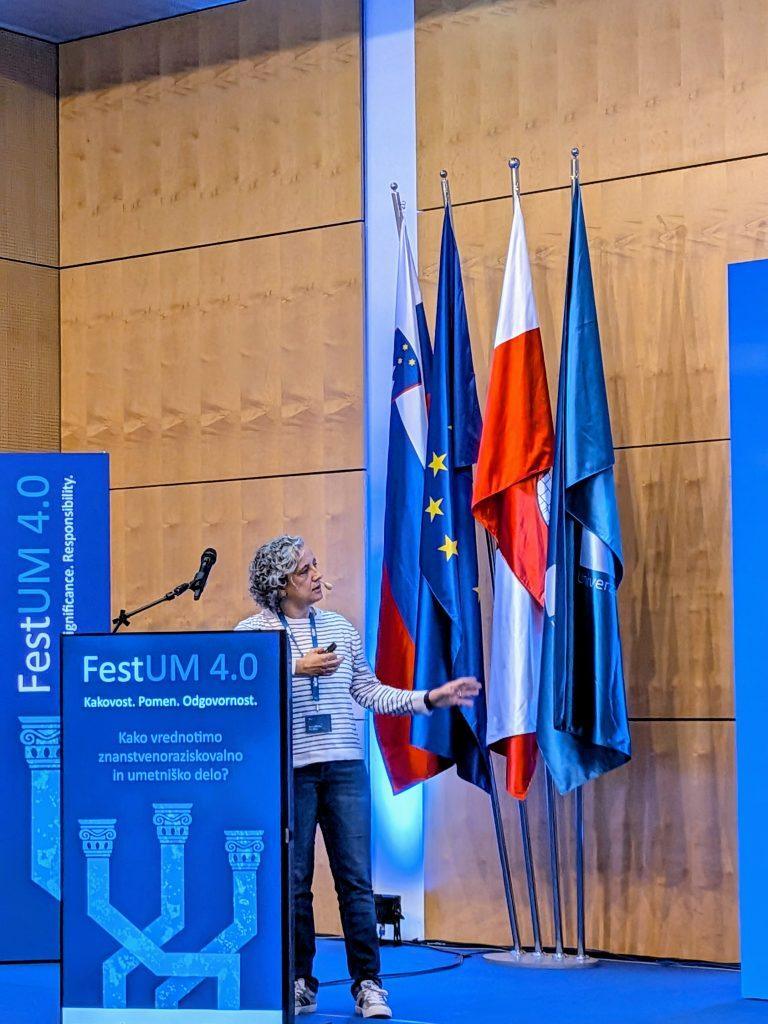
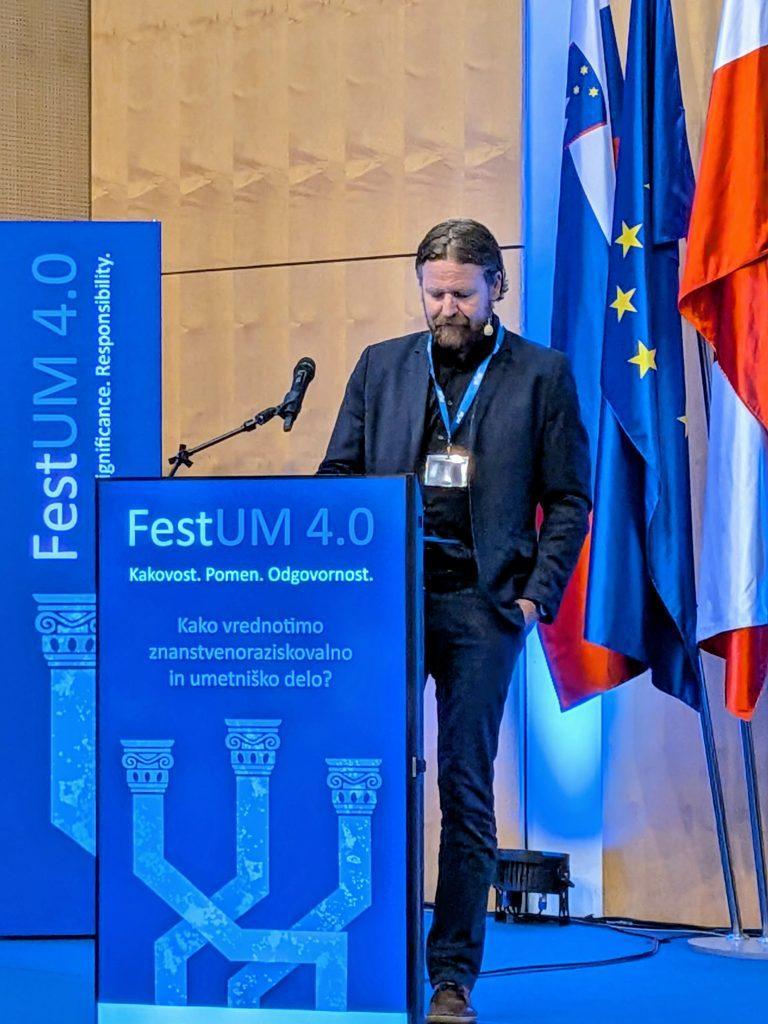
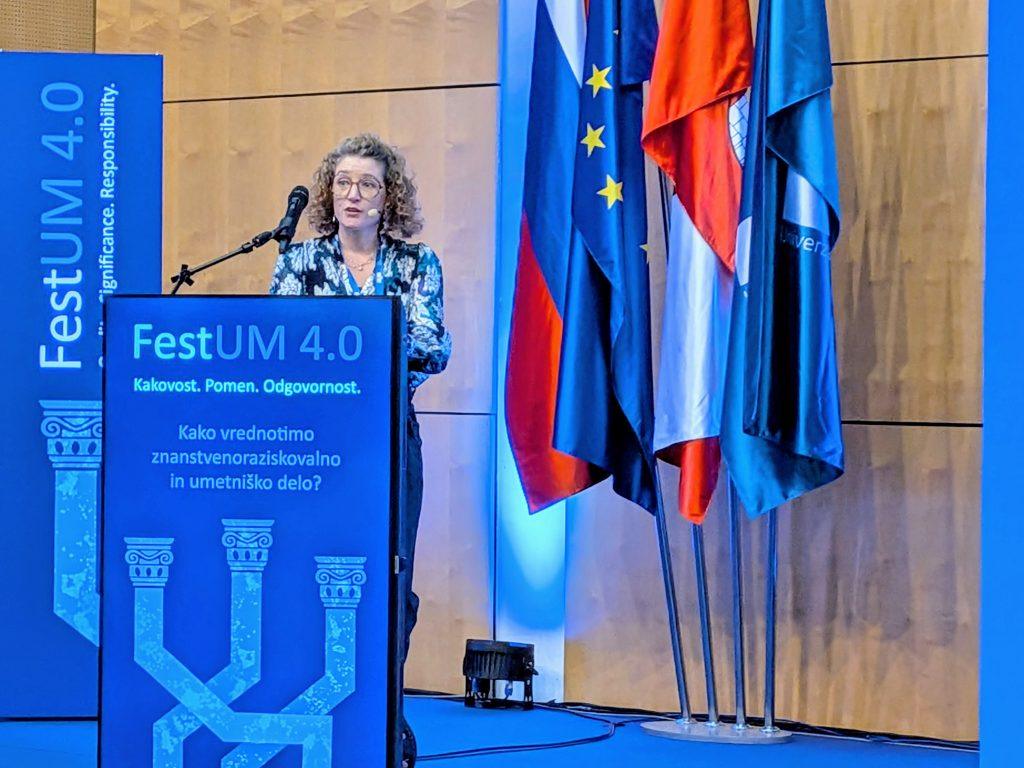
»Changes in the field of research evaluation take time. We are not merely changing rules and procedures, but the culture of research. That is precisely why it is important that we develop new approaches together with researchers and institutions and introduce them gradually,« Herman Strøm emphasised.
Qualitative evaluation as one of the key themes for future development
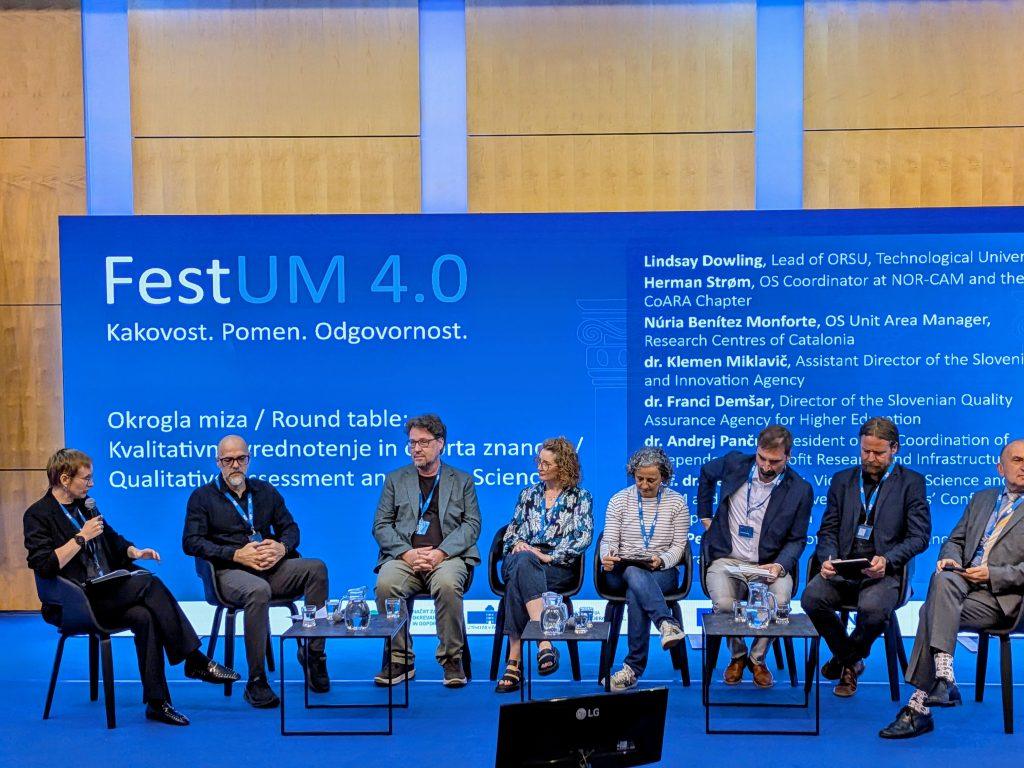
The main part of the event was Round table »Qualitative Evaluation and Open Science«, chaired by Maja Peharc. Representatives of domestic and international institutions discussed how to establish evaluation systems that will better reflect the diversity of research work and promote open, high-quality and socially relevant science.
The discussion revealed that the European Research Area is increasingly supporting reforms that reduce reliance on individual bibliometric indicators and place greater emphasis on expert judgement, open science, research integrity and the broader impact of research. Among the key challenges, participants highlighted ensuring trust in evaluation processes, establishing appropriate infrastructure to support open science, securing resources for high-quality peer review, and the impact of artificial intelligence, which is significantly transforming the research environment.
They particularly emphasised that the introduction of qualitative evaluation does not mean abandoning quantitative approaches, but rather using them in a more considered and responsible manner, in combination with expert judgement and an assessment of the broader research contribution.
The next steps for the Slovenian research community
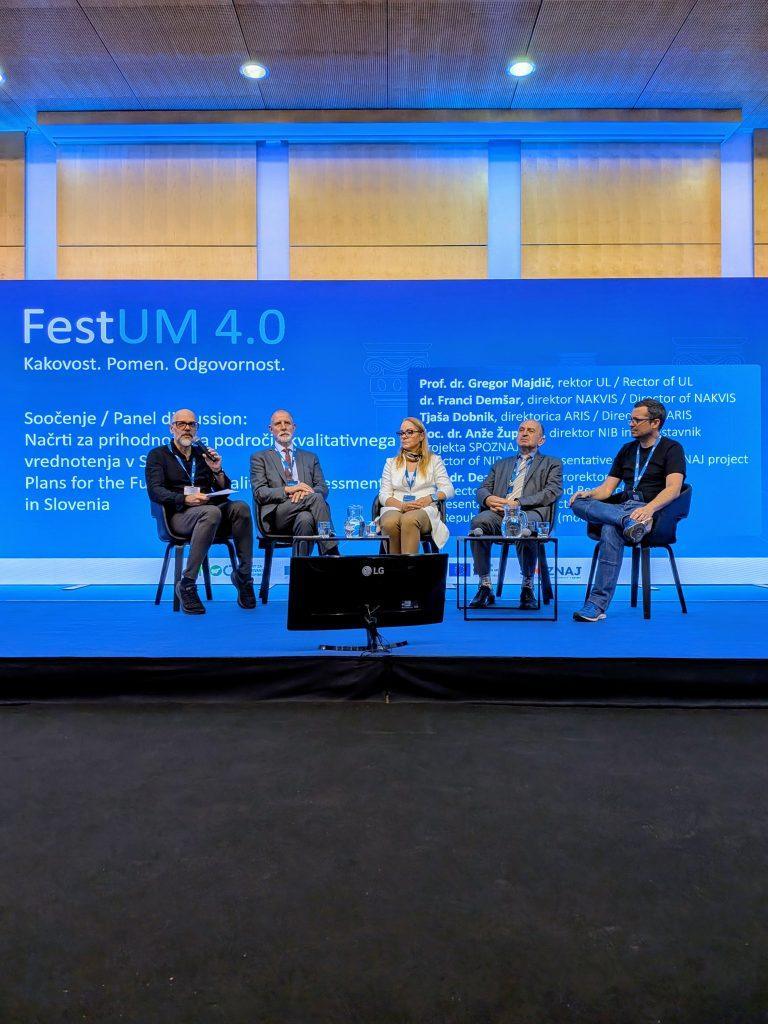
The afternoon panel discussion on the future direction of quality assessment in Slovenia, chaired by Prof. Dean Korošak, Vice-Rector for Research at the University of Maribor, the following participated: Prof. Dr Gregor Majdič, Rector of the University of Ljubljana; Dr Franci Demšar, Director of the National Agency of the Republic of Slovenia for Quality in Higher Education (NAKVIS); Tjaša Dobnik, Director of the Public Agency for Scientific Research and Innovation of the Republic of Slovenia (ARIS), and Assoc. Prof. Dr Anže Županič, Director of the National Institute of Biology (NIB) and representative of the SPOZNAJ project.
The participants emphasised that the reform of research evaluation will require the gradual introduction of new evaluation approaches, with expert judgement and peer review processes continuing to play an important role. They discussed the possibilities of introducing narrative CVs, a greater role for self-evaluation by research organisations, and the search for a balance between qualitative and quantitative elements of evaluation.
They also paid particular attention to the issue of quality assurance in the context of the rapid development of artificial intelligence, which brings new opportunities whilst simultaneously raising important questions regarding the reliability, integrity and evaluation of scientific results. Participants agreed that the reform of research evaluation is not merely a question of new criteria, but also a question of research culture, trust and the responsibility of all stakeholders in the research system.
The SPOZNAJ project has laid the foundations for the further development of open science
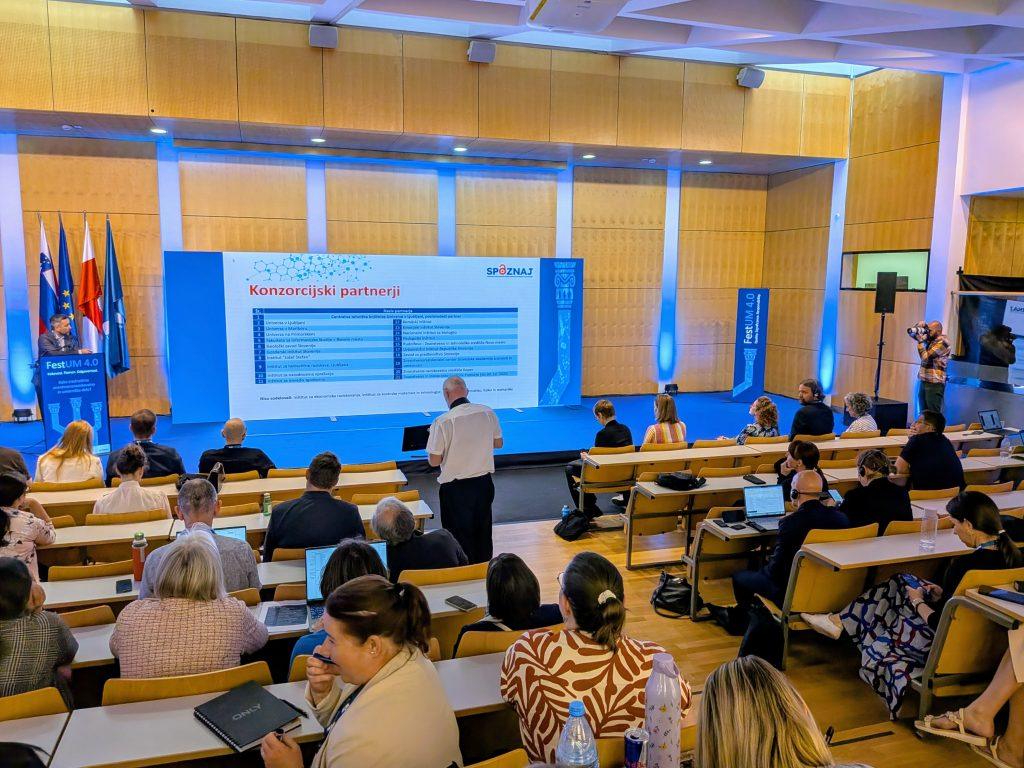
The event concluded with a presentation of the results of the SPOZNAJ project, which, over the course of its three-year run, has made a significant contribution to the understanding and implementation of open science in Slovenia. The project has produced handbooks, training courses, specialist materials and support mechanisms aimed at researchers, librarians, data curators and research organisations. The SPOZNAJ project’s national events have attracted considerable interest both at home and abroad in recent years. They have been attended by numerous international experts in the field of open science and research evaluation, with individual events attracting over a hundred participants.
Tilen Mandelj, Acting Director of the Central Technical Library at the University of Ljubljana, emphasised at the conclusion that activities in the field of open science will not cease with the end of the project. Funding for the activities set out under the SPOZNAJ project will continue as part of the Open Science Action Plan, with the Central Technical Library of the University of Ljubljana continuing to oversee content coordination in the future.
"In closing, I would like to express my sincere thanks to all the partners and participants whose expertise, dedication and cooperation made the successful completion of this project possible. Special thanks go to Dr Teja Romih, who, as project leader, provided important guidance on its implementation and brought together key stakeholders. I must also mention Mag. Mira Pušnik, the late director of the Central Technical Library of the University of Ljubljana, who was one of the key initiators of the project and a long-standing promoter of open science in Slovenia,« concluded Tilen Mandelj.
::::::::::::::::::::::::::::::
About the MEET project:
The aim of the SPOZNAJ project, which has been running since 2023 and is due to conclude at the end of June 2026, is to establish support mechanisms and tools for the implementation of open science practices within the Slovenian research community. The project involves the Central Technical Library of the University of Ljubljana as the lead partner and 20 Slovenian public research and higher education organisations. Open science encompasses open access to research results, the evaluation of the quality and impact of scientific research using responsible metrics, and the involvement of citizens in scientific research.
To date, the project partners have, among other things, organised numerous training sessions and presentations on open science, as well as specialist training for data professionals. Two handbooks have also been produced – Discover FAIR: a guide to open science in Slovenia and Handbook on planning the handling of research data – and Open Science Terminology Dictionary. In addition, they organised an exhibition on open science, which was on display in Koper and Ljubljana in 2025 and is currently being hosted in Maribor. The project is co-funded by the Ministry of Higher Education, Science and Innovation and the European Union – NextGenerationEU through the national Recovery and Resilience Plan.
